
TypeScript 类型谓语
TypeScript 或许没有我们想象中的那么聪明。
背景
被一个问题困扰已久,看下面一段 TypeScript 代码
const tags = []
if (flagA) {
  tags.push({ text: 'textA', color: 'colorA' })
}
这段代码很好理解,我们根据 flagA 真假来填充 tags 数组的内容。
但如果有很多条件判断呢?比如:
const tags = []
if (flagA) {
  tags.push({ text: 'textA', color: 'colorA' })
}
if (flagB) {
  tags.push({ text: 'textB', color: 'colorB' })
}
if (flagC) {
  tags.push({ text: 'textC', color: 'colorC' })
}
if (flagD) {
  tags.push({ text: 'textD', color: 'colorD' })
}
这段代码是不是看着头开始痛起来了,所以我们通常会这么写
// flagA?: boolean
type Tag = {
  text: string
  color: string
}
const tags = [
  flagA && { text: "textA", color: "colorA" },
  flagB && { text: "textB", color: "colorB" }
].filter(Boolean)
其实实质是利用 && 运算符懒惰特性,然后借助 filter 函数过滤掉无效值。
类型丢失
好了进入正题,问题来了上面这种写法得到的 tags 的类型是什么呢?
从逻辑层面考虑 tags 的类型应该为 Tag[],可是遗憾的是 TypeScript 并没有这样判断
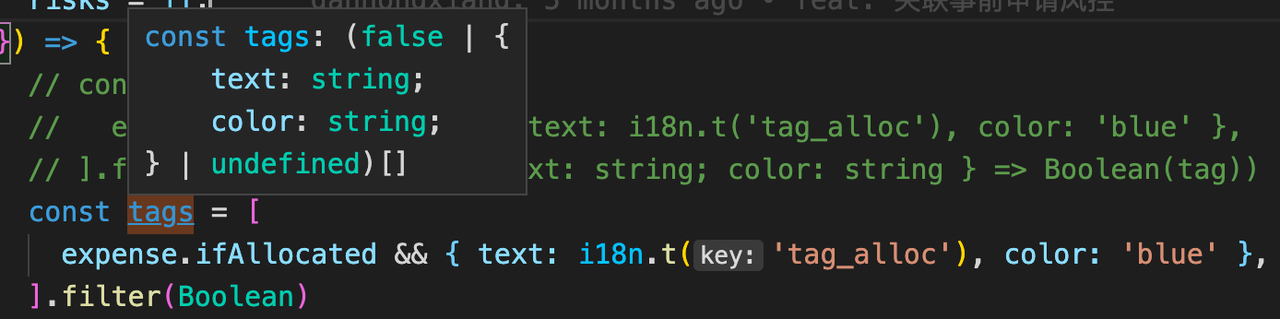
一开始我也是百思不解,理论上经过 filter 去掉 false 和 undefined 的情况,那不是只剩下 Tag 类型了么?为什么两种假值还存在类型中呢?
filter 是 Array 原型上的函数,所以我们可以研究一下对应的类型文件:
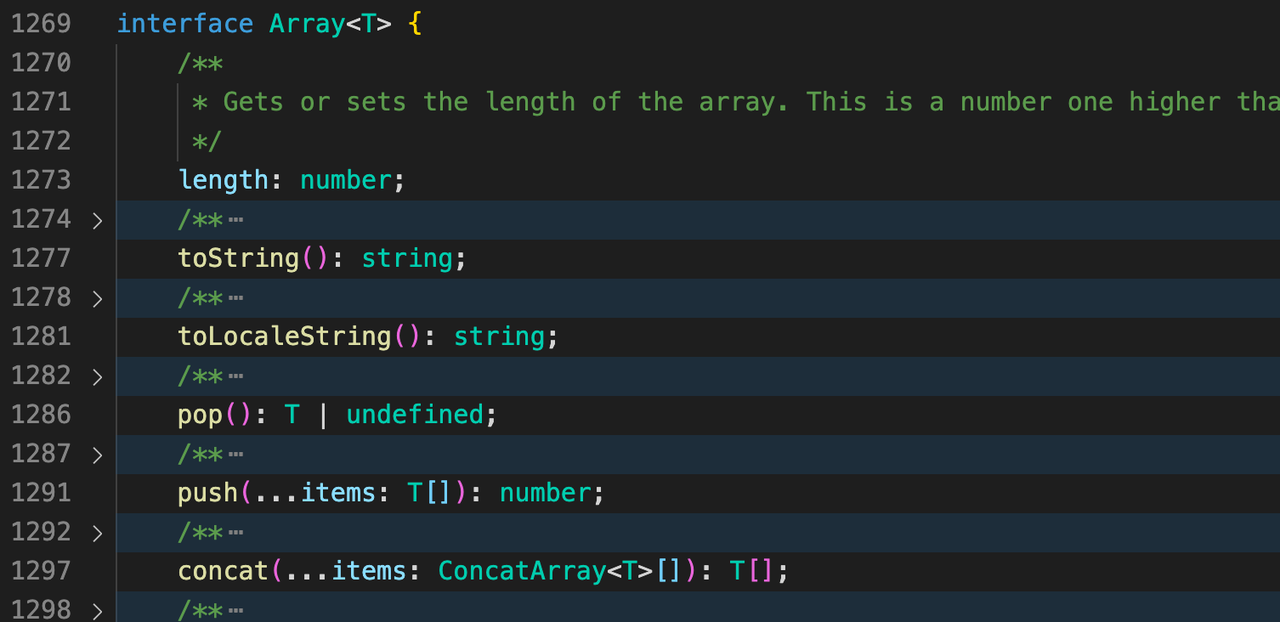
可以看到接口 Array 存在范型 T,也就是说我们在 new Array 时就会确定 T 的类型,我们上述代码中的 […] 其实也是 new Array 的一种语法糖
const tags = new Array([
  flagA && { text: "textA", color: "colorA" },
  flagB && { text: "textB", color: "colorB" }
]).filter(Boolean)
也就是说我们可以确定此时的 T = false | undefined | Tag
我们再找到 filter 函数的类型
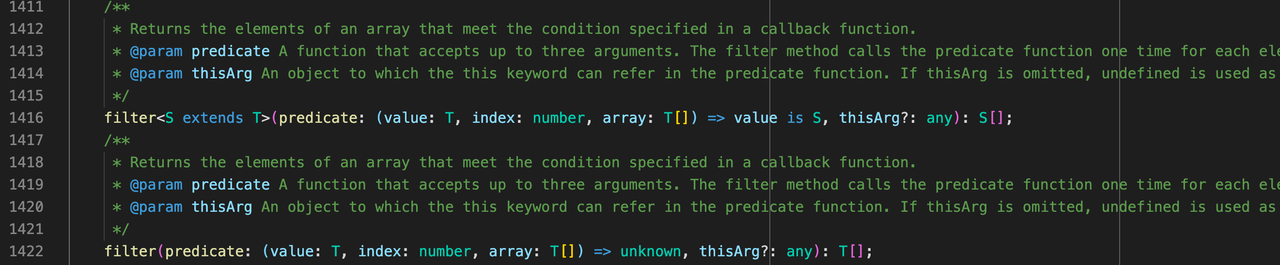
可以看到 filter 有两种形式,如果我们主动声明范型 S,那么最终输出结果就是 S[],如果没有那么 filter 就只会返回最初实例化 Array 时记录的类型。
换句话说 filter 返回的类型和传入的回调函数是什么没有半毛线关系,因为 filter 无法得知回调函数 predicate 内部到底过滤了啥、留下了啥、返回了啥。
filter 不会根据 predicate 创造类型,filter 只是类型的搬运工!
那么就没救了吗?不,我们要充分相信 TypeScript 的设计,再回过头来看第一种声明,我们尝试在开头声明范型
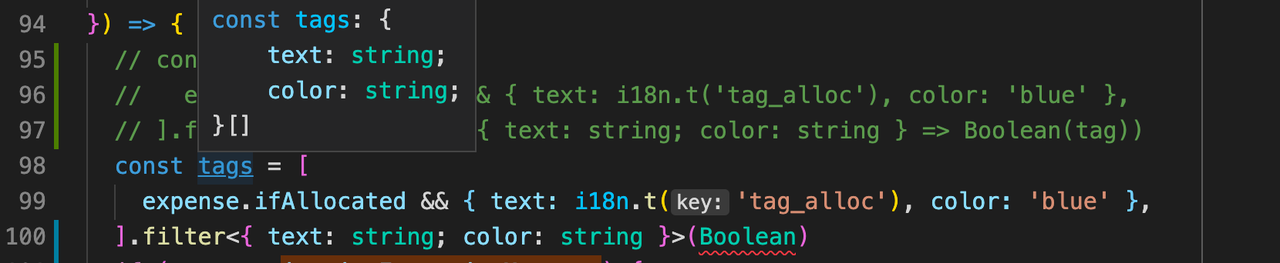
似乎返回类型正确了,但我们发现 Boolean 函数下出现了刺眼的红色波浪线,铺垫了这么多终于要讲到本文的关键点。
类型谓语 is
我们仔细观察一下 filter 的第一种声明中范型 S 不仅仅出现在 <S extends T> 中,似乎还出现在 predicate 中,(value: T) => value is S 。
这是个啥?从来没见过,查阅一下 官方文档 的 is 关键词,它对 is 的使用场景做了描述:
We’ve worked with existing JavaScript constructs to handle narrowing so far, however sometimes you want more direct control over how types change throughout your code.
To define a user-defined type guard, we simply need to define a function whose return type is a type predicate
看完说明和用例我就恍然大悟了,其实如果经常写库,is 是一个非常常见的关键词,我们可以看一下 lodash 的声明文件,比如比较常用的 isNil,我们可以认为这是一种断言函数
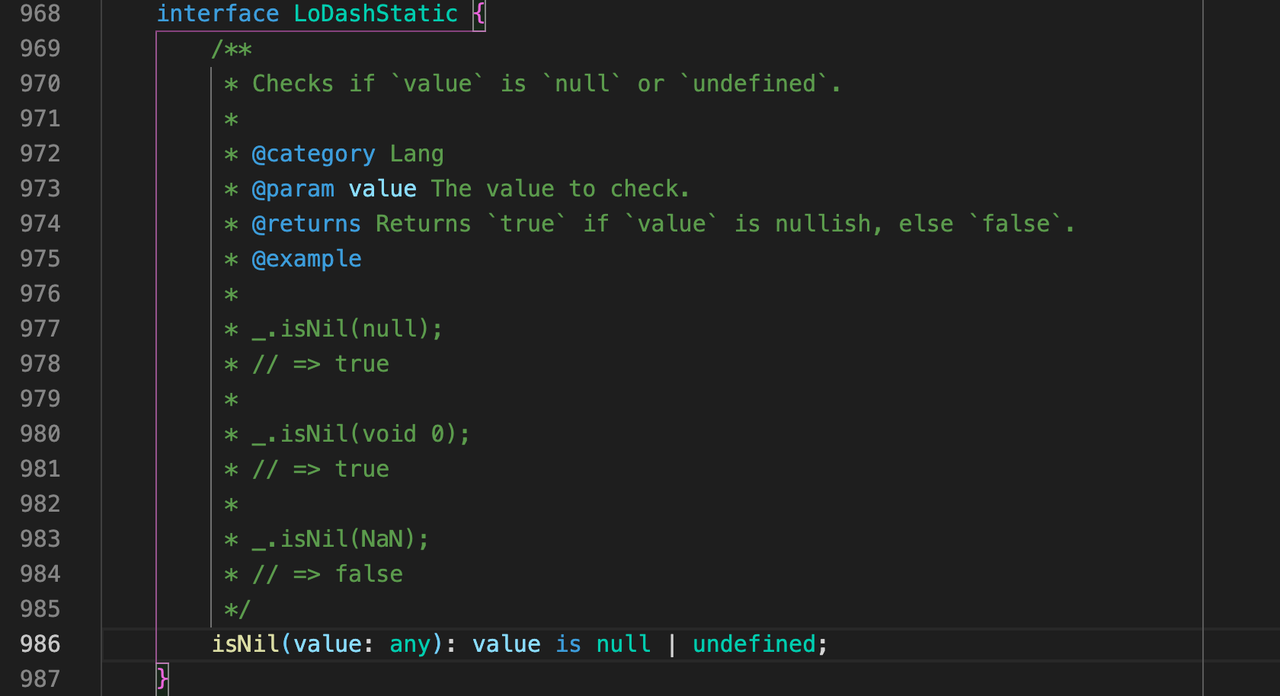
所以借助 is 我们可以非常优雅的完成类型范围缩小。
type Tag = {
  text: string
  color: string
}
const tags = [
  flagA && { text: "textA", color: "colorA" },
  flagB && { text: "textB", color: "colorB" }
].filter((i): i is Tag => Boolean(i))
这段代码得到的变量 tags 的类型就是唯一确定的 Tag[] 。
回过头来,我们再思考一下在 filter 中如果我们使用了范型 S,就必须有对应的断言函数呢?其实这就是 TypeScript 的严谨性,我们可以发现范型 S,并不能随便指定它存在两个约束条件:
- S 必须继承自 T
- S 必须是 predicate 断言函数为真时的断言类型
仔细想一想如果失去了其中一种约束,这时是不是就等于
// filter<S>(): S[]
const tags = [...].filter<any>(callback)
然后我们再换一种写法
const tags = [...].filter(callback) as any[]那么 TypeScript 类型约束就会形同虚设。
值得深思的是,TypeScript 被称为 JavaScript 的超集。而事实上 TypeScript 仅仅存活在 TypeScript Server 或者 TSC 编译时中,所谓的类型约束。当类型与 JavaScript 逻辑产生耦合的时候就可能需要使用强制声明来弥补 TypeScript 的不足。
Based Type Guards: this
我们已经知道了 is 具有断言的作用,当然这是针对使用函数判别某个变量时的场景。那么如果是在 class 内呢?先举个场景例子
type Form = AForm | BForm
class Common {
  form: Form
  constructor(f: Form) {
    this.form = f
  }
}
class AForm {
  common: Common
  type: string = 'A'
  constructor() {
    this.common = new Common(this)
  }
  echoA() {}
}
class BForm {
  common: Common
  type: string = 'B'
  constructor() {
    this.common = new Common(this)
  }
  echoB() {}
}
我们在不同的业务场景存在不同的表单 A 和表单 B,但作为表单总存在公共的内容,我们使用 Common 数据结构来表达它,当我们需要在一个公共组件中使用实例 form 时,我们需要判断表单是 A 还是 B 来承接不同内容。
例如我们使用一个叫 echoCommonContext(common: Common) 显示公共部分,以及两种表单的特殊部分。
理所应当的,我们会使用 common.form.type === 'A' 来判别传入的 common 的父类到底是 A 还是 B 来决定调用 echoA() 还是 echoB(),从 JavaScript 的角度一切都没有问题。
可是遗憾的是 TypeScript 并不能从 === 推断出 common.form 的类型,因为在他看来这是完全不相关的逻辑:
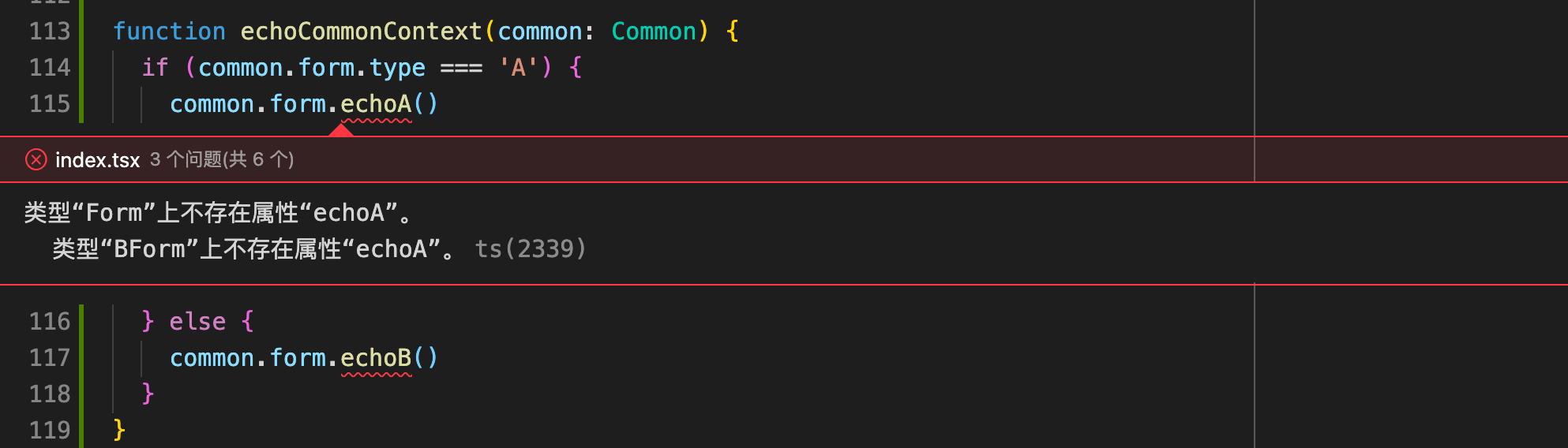
这种场景和我上述讲的 filter 有些相似,但并不是完全没有解决办法,我们可以借助 enum 来告诉 TypeScript common.form.type 不是仅仅是一个字符串,他还有决定上层类型的作用
enum FormType {
  A = 'A',
  B = 'B',
}
class AForm {
  type: FormType.A = FormType.A
}
class BForm {
  type: FormType.B = FormType.B
}
function echoCommonContext(common: Common) {
  if (common.form.type === FormType.A) {
    common.form.echoA()
  } else {
    common.form.echoB()
  }
}
这会使得 aForm.type 被永久的打上 FormType.A 的烙印,他不能是别的任何值,哪怕是看起来完全相同的值字符串 "A"。
我们还有更优雅的解决方案,我们可以写一个函数专门用于判断 AForm 类型尝试借助上文讲的 is 去断言类型
const isAForm = (form: Form): form is AForm => form.type === 'A'这种方式非常完美的解决了类型断言问题,还不需要使用枚举这种限制巨大的类型
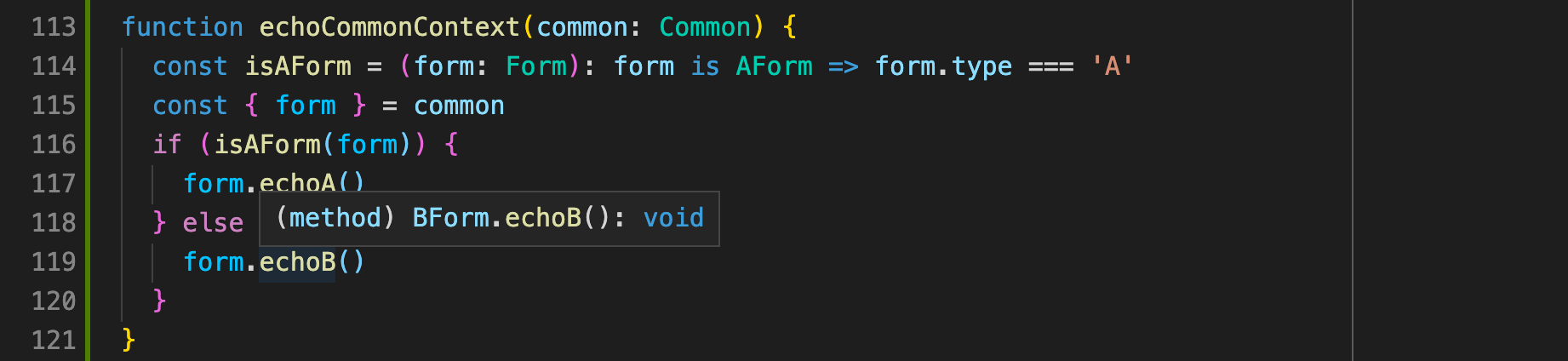
本着程序员的直觉,我们可以发现 isAForm 可能在未来不仅仅被使用在一个地方,他完全有资格成为 Common 的一个属性,所以我们把他放到 Common 内部。
并且放到内部还有个好处,isAForm 不再需要额外的传参,他完全可以访问到实例内部 form 的地址。
然而问题又来了, is 是对传入参数的类型断言,现在我们取消了传参该如何对 form 进行类型定义呢?
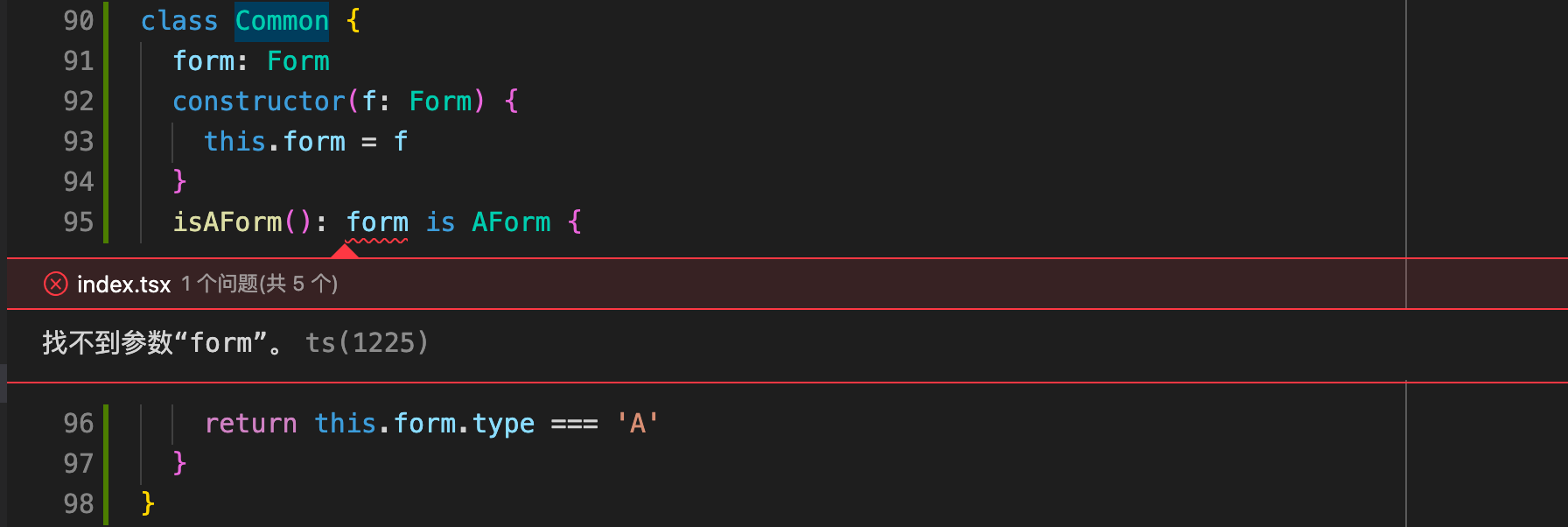
于是乎 this is 闪亮登场,TypeScript 官方的文档很友善的把 this is 的 文档链接 贴在 is 文档下方,没错哦,他料到了你用了 is 这种骚操作之后肯定会遇到这个问题。
You can use this is Type in the return position for methods in classes and interfaces. When mixed with a type narrowing (e.g. if statements) the type of the target object would be narrowed to the specified Type.
官方的解释很直白,这玩意是专为 class 准备的,有了它我们就可以这样写:
class Common {
  form: Form
  constructor(f: Form) {
    this.form = f
  }
  isAForm(): this is Common & { form: AForm } {
    return this.form.type === 'A'
  }
}
值得一提的是,即使使用这种方式我们也不能改变最初被赋值声明类型的子属性
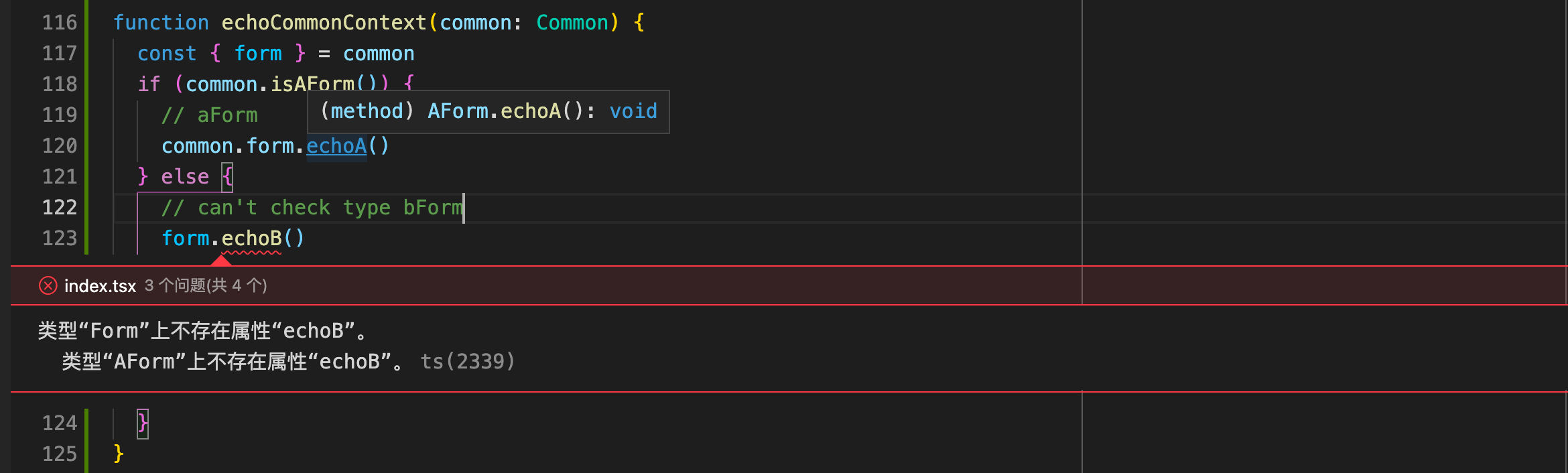
可以看到在 common.isAForm() 之前,我们如果已经赋值 const { form } = common,那么这个 form 仍然无法被 TypeScript 确定类型。